When you click the link, it will take you to the corresponding page.
ランチお任せ
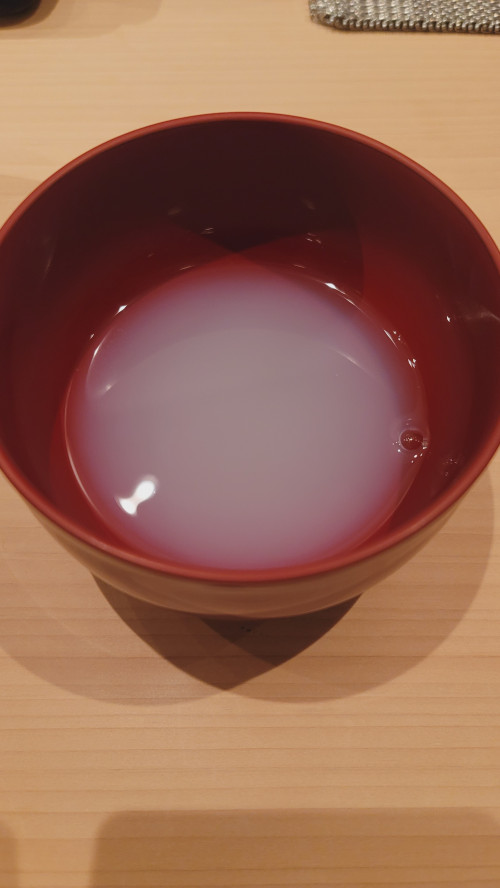
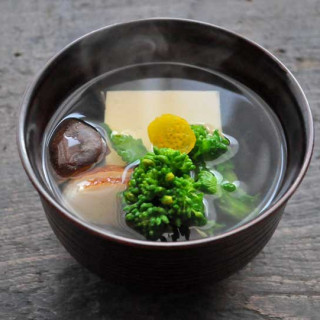
蛤吸い物
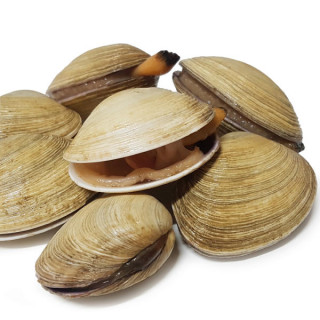
In Japanese, the clam species within the family Veneridae is called "hamaguri" (蛤). The name "hamanoguri浜の栗" is derived from combining the words "hama" (浜), meaning "beach," and "kuri" (栗), meaning "chestnut," due to its resemblance to a chestnut found on the beach. Hamaguri is a popular ingredient in many representative Japanese dishes, including "suimono" (吸物), a clear soup, "sakamushi" (酒蒸し), steamed with sake, "yaki hamaguri" (焼き蛤), grilled hamaguri, "nuta" (ぬた), a marinated dish, and "shigure hamaguri" (時雨蛤), a simmered dish. In sushi restaurants, hamaguri is typically not consumed raw. Instead, it is lightly cooked and marinated before being used in dishes, referred to as "nihamaguri" (煮蛤). In Japan, hamaguri is often associated with marital harmony, and it is common to serve hamaguri suimono at wedding banquets. Hamaguri clams naturally have two shells that fit perfectly together. However, when attempting to match the shells of different hamaguri clams, gaps may occur, preventing them from closing tightly. This appearance symbolizes a lifelong and happy relationship with a single partner. On March 3rd, during the Hina Matsuri (雛祭り) festival, also known as Girls' Day or Doll's Festival, people consume hamaguri suimono, hoping for good relationships and fortunes for children.
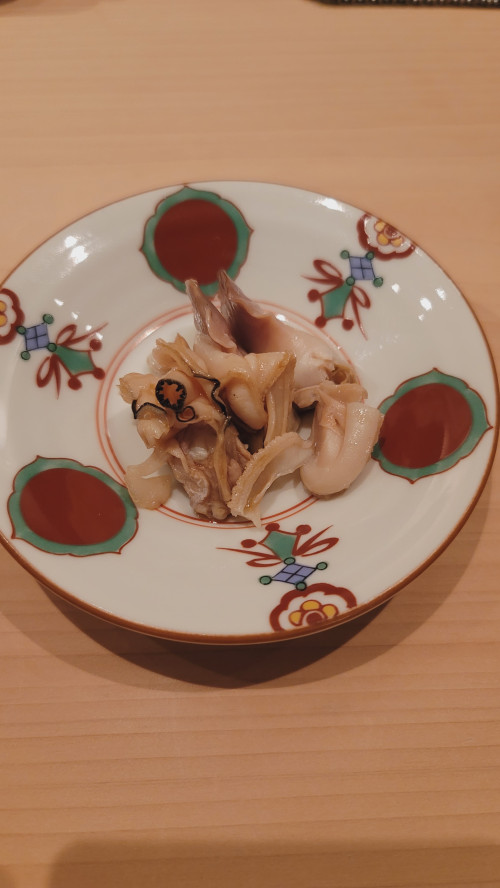
蛤香り焼き
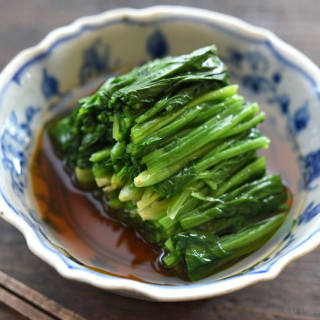
大黒しめじとほうれん草のおひたし
Ohitashi is a traditional Japanese cooking method where vegetables are briefly soaked in a seasoning liquid made from soy sauce, miso, mirin, and other ingredients to let the flavors infuse. The name "Ohitashi" comes from the verb "浸す" (hitasu), which means "to soak" or "to immerse." This cooking method is simple yet enhances the natural flavors of the ingredients. Commonly used ingredients for ohitashi include spinach, mizuna, chives, burdock root, daikon, and mushrooms. These vegetables are quickly blanched and then soaked in the seasoning liquid to absorb the flavors. Spinach ohitashi is particularly popular and is a common side dish in Japanese households. The seasoning liquid for ohitashi is made from soy sauce, miso, mirin, and dashi, with optional additions of bonito flakes or sesame seeds to enhance the flavor. This seasoning liquid blends well with the ingredients, adding umami and enhancing the color of the vegetables. Ohitashi is beloved as a basic side dish in Japanese home cooking because it can bring out deep flavors with a simple method, and it offers an easy way to consume healthy vegetables.
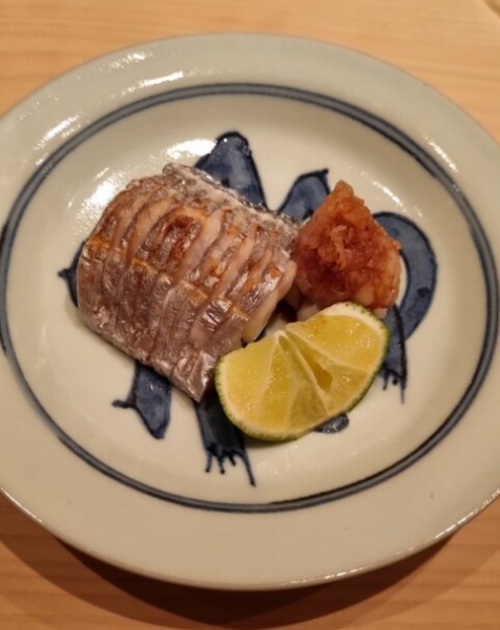
太刀魚炭火焼き
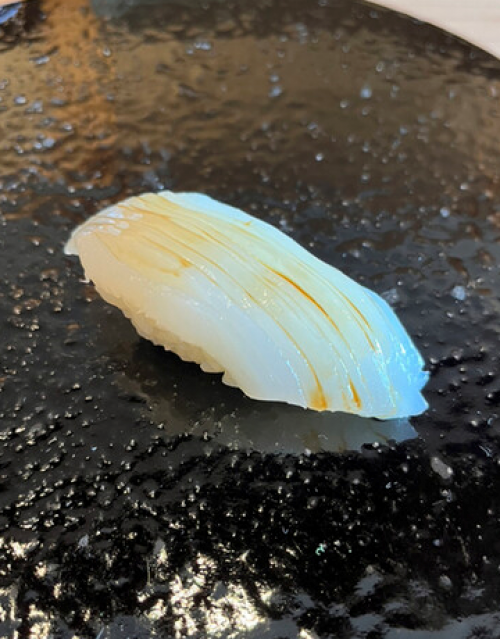
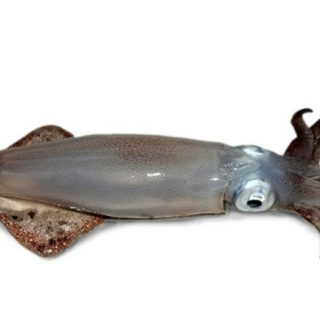
剣先イカ
The kensaki-ika, or swordtip squid, is known for its slender body and translucent white flesh. Its name derives from its resemblance to the tip of a sword. The flesh is tender and naturally sweet, making it a delight when eaten raw. In sushi restaurants, kensaki-ika is featured in nigiri and decorative sushi dishes. High-quality squid is considered a delicacy and is often served fresh. Cutting the squid finely or lightly searing it enhances its flavor and texture, offering a smoky aroma and a pleasant chewiness.
タイ
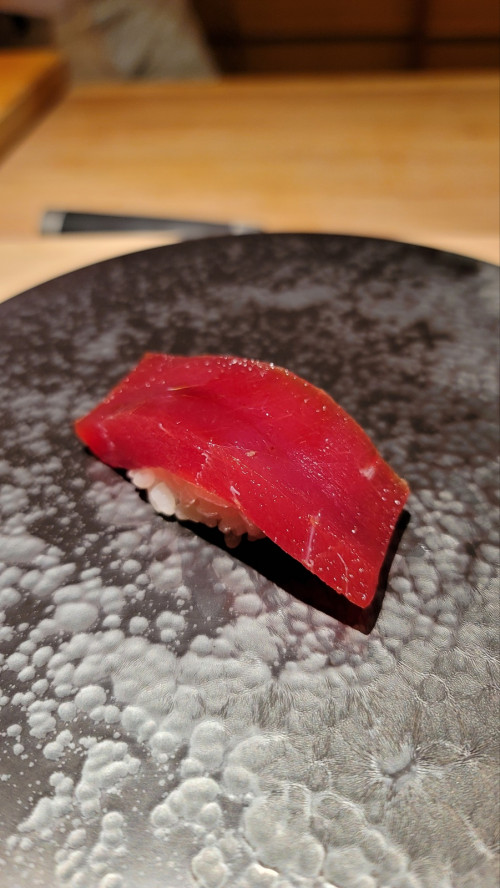
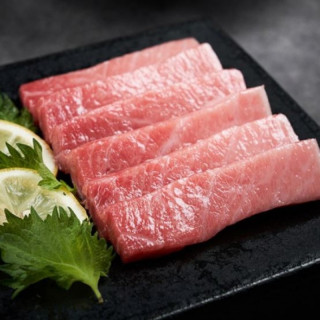
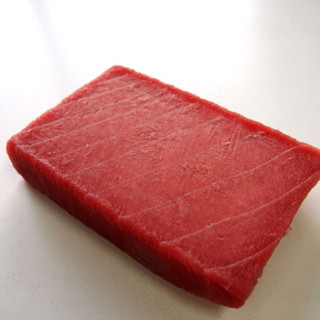
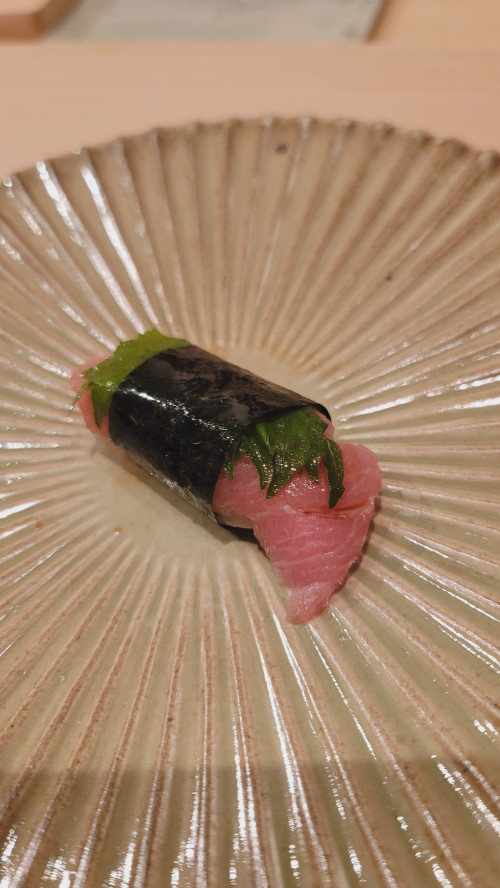
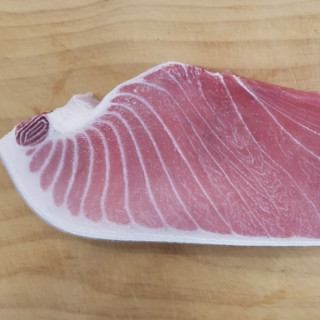
中とろ
The different parts of a tuna can be broadly categorized into two: the fatty portion called "toro" and the other parts known as "akami" or red meat. Toro can also be further divided into various sections, but the most fatty portion known as "otoro" (大トロ) and the representative toro section with a moderate amount of fat known as "chutoro" (中トロ) are often mentioned. Generally, otoro refers to the belly area closer to the head of the tuna, while chutoro refers to the meat found in the belly and back areas. However, there is no clear definition that distinguishes otoro from chutoro. Recently, Sushineta, which is more than twice the price of akami, has gained popularity. However, in old Japan, akami was the preferred part of the tuna, while toro was considered a discarded section. The people of old Japan preferred a clean taste over a fatty one, and due to the lack of refrigeration and preservation techniques, the fatty toro section easily underwent flavor changes. During the Edo period, it was even considered a fish that not even a cat would bother to touch, and was called "nekomatagi" (猫またぎ) meaning "a fish that a cat simply passes by." It was only later, as the Japanese palate evolved and refrigeration technology advanced, that toro gradually gained its current popularity. The term "toro" originates from the Japanese word "torokeru" (とろける), meaning to melt. It was in 1918 at the Nopo sushi restaurant "Yoshinozushi" in Tokyo that the term "toro" began to be used and spread nationwide. Prior to that, it was referred to as "abu" (アブ), derived from the first character of "abura" (脂), meaning fat, indicating the fatty section.
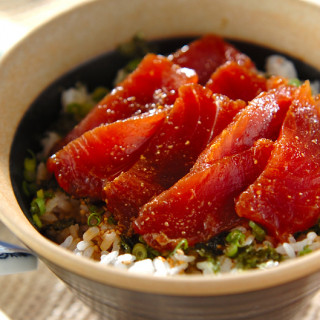
マグロ赤身漬け
渍けZuke is a dish in which sashimi is marinated in a seasoning liquid made with soy sauce. When refrigeration and freezing technology was not developed, this method of preserving perishable raw fish was adopted from the Edo period. In addition to improving preservation, it can eliminate fishy smells and deepen the taste. Therefore, this is also a prevalent cooking method in today's generation with advanced distribution technology. It mainly produces sashimi, such as tuna red meat, bream, and horse mackerel. Put zuke on top of rice and eat it in a rice bowl. This is called zukedon.
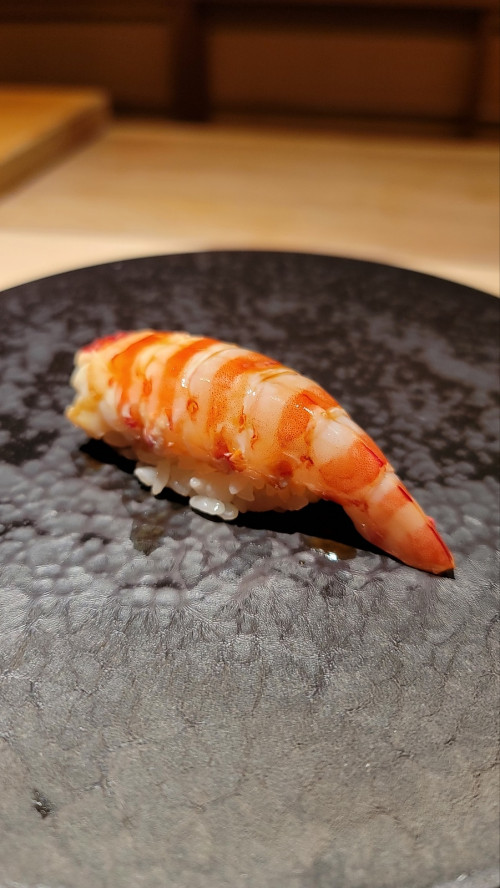
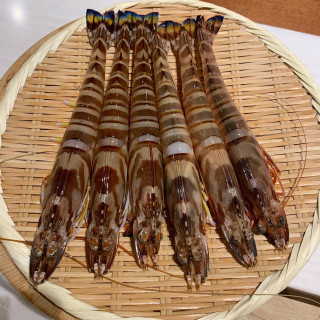
車海老
Kuruma shrimp, known as "Kurumaebi" in Japan, is a type of shrimp found in warm waters, including the coastal regions of Japan. It is highly regarded as a premium seafood due to its delicious taste. The shrimp typically measures around 20-30 cm in length and is characterized by its brown and white striped pattern. The flesh of the Kuruma shrimp is firm and sweet, making it delicious whether eaten raw or cooked. In sushi restaurants, Kuruma shrimp is a popular choice for sushi toppings (neta) due to its exquisite taste and beautiful appearance. There are two main ways to serve Kuruma shrimp as sushi neta: raw ("Nama Kurumaebi") and blanched ("Yubiki Kurumaebi"). Raw Kuruma shrimp offers a bouncy texture and sweet flavor, while blanched Kuruma shrimp provides a subtle sweetness and a tender texture. Both are enhanced when enjoyed with soy sauce and wasabi. Additionally, Kuruma shrimp is often served as nigiri sushi, with the shrimp's tail left intact for a visually appealing and luxurious presentation.
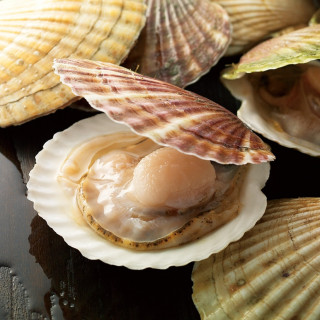
帆立
Scallops, known as "Hotate" in Japanese, are prevalent seafood in Japanese cuisine. They are commonly found in sushi restaurants and Japanese cuisine establishments. Scallops are typically consumed raw or lightly grilled and served with sushi rice or wrapped in nori (seaweed). They can also be prepared as sashimi or sushi rolls. Although they are commonly referred to as "scallops" (the standard Japanese term is "Hotategai"), the term specifically refers to the muscular part of the scallop known as the "Hotatehashira." The word "Hotate" (帆立) has an interesting origin. According to records, in a Japanese encyclopedia from the 17th century, the appearance of a scallop with its shell open and moving resembled the image of a sailing ship with its sails unfurled, hence the name. The "ho" (帆) in Japanese represents a sail, and "tate" (立) represents standing or upright. Additional notes: Scallops can also be enjoyed pan-seared with butter, and during travels in Hokkaido, dried scallop muscles are popularly purchased as souvenirs and snacks. In 1856, scallops were given the scientific name "Mizuhopecten Yessoensis" by an American, with the first part representing the scallop genus and the latter part "Yessoensis" referring to the comb-shaped clams found in the Hokkaido region of Japan. It was named based on the resemblance between the ribbed muscles of scallops and the shape of comb clams. Scallops have also appeared in Western art history, as depicted by the Renaissance painter Sandro Botticelli in his artwork "The Birth of Venus." The goddess of love and beauty, Aphrodite, is depicted standing on a large shell, which is a scallop. When scallops move in the sea, they do not open their shells and physically move, as the name might suggest. Instead, they propel themselves by taking in water with their open shells and then forcefully expelling it. The same is true for the tongue of a geoduck clam. Throughout history, people have often named animals based on their own interpretations.
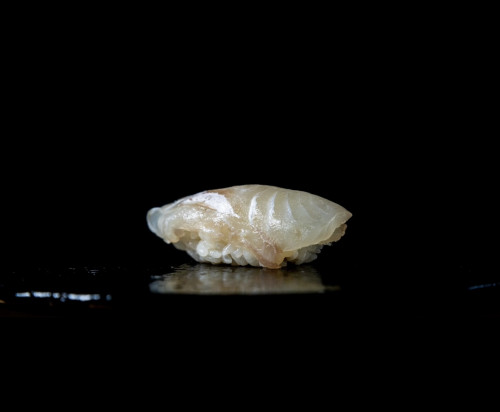
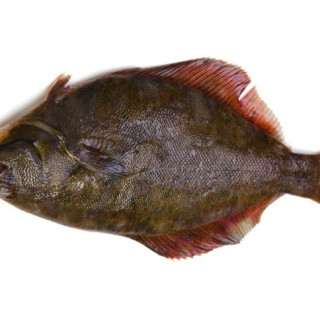
ヒラメ
Hirame (平目), known as olive flounder in English, is one of Japan’s most popular white-fleshed fish. The name comes from “hira,” meaning flat, and “me,” meaning eye, referring to its flat body and the fact that both eyes are located on the same side of the head. A similar fish is the flounder-like flatfish known as karei. In Japan, people often distinguish them using the saying “left Hirame, right Karei,” meaning a fish with both eyes on the left side is Hirame, while one with eyes on the right side is Karei. In sushi restaurants, Hirame is often prepared using a technique called Kobujime (昆布締め), in which the fish is wrapped or pressed between sheets of kombu kelp. The glutamic acid contained in the kelp transfers to the fish, enhancing its natural umami. At the same time, the kelp absorbs excess moisture, creating a firmer texture and a richer flavor. As a result, Kobujime Hirame offers deeper sweetness and a more refined taste than freshly sliced sashimi. One of the most prized parts of Hirame is Engawa (縁側), the fin muscle. The name originally refers to a traditional Japanese veranda, as the cut is located along the edge of the fish. Its chewy texture and rich flavor make it one of the most sought-after sushi toppings.
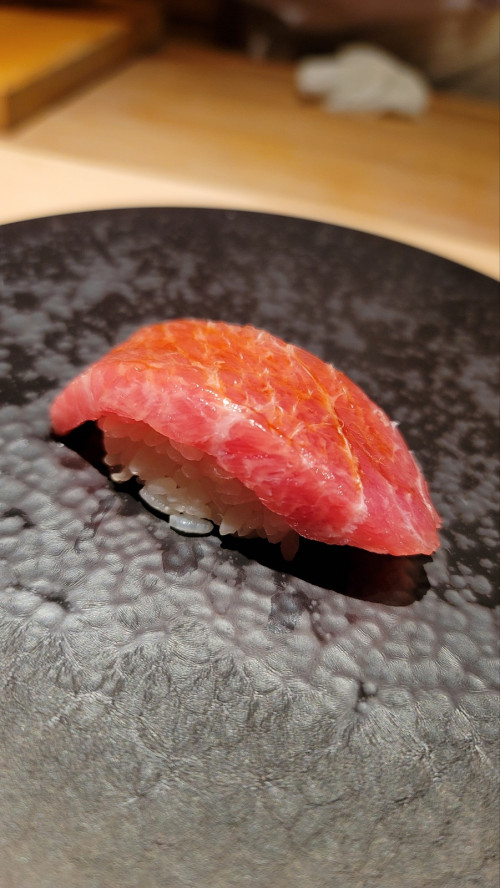
大とろ
The parts of tuna can be broadly divided into two categories: the fatty part called "toro" and the lean part called "akami" (red meat). Toro itself can be divided into several parts, but the most representative are "otoro" (大トロ), which is the fattiest part, and "chutoro" (中トロ), which has a balance of akami and fat. Generally, otoro refers to the fatty belly meat near the head of the tuna, while chutoro refers to the meat found in the belly and back areas of the tuna. However, there are no strict rules that clearly define the difference between otoro and chutoro. Recently, toro has become a popular sushi topping, often costing more than twice the price of akami. However, in the past, Japanese people ate only the akami part of the tuna, and toro was considered a discard. The Japanese in the old days preferred a clean taste over a fatty one, and due to the lack of refrigeration and distribution technology, the fatty toro parts would spoil quickly. In the Edo period, it was even referred to as "nekomatagi" (猫またぎ), meaning something even cats would pass over. As Japanese tastes evolved and refrigeration technology developed, toro gradually gained its current popularity. The name "toro" is derived from the Japanese word "torokeru" (とろける), which means "to melt." It was first called toro in 1918 by the long-established sushi restaurant Yoshinozushi (吉野鮨) in Tokyo, and this name spread and became widely used. Before that, the fatty part was called "abu" (アブ), derived from "abura" (脂), meaning fat.
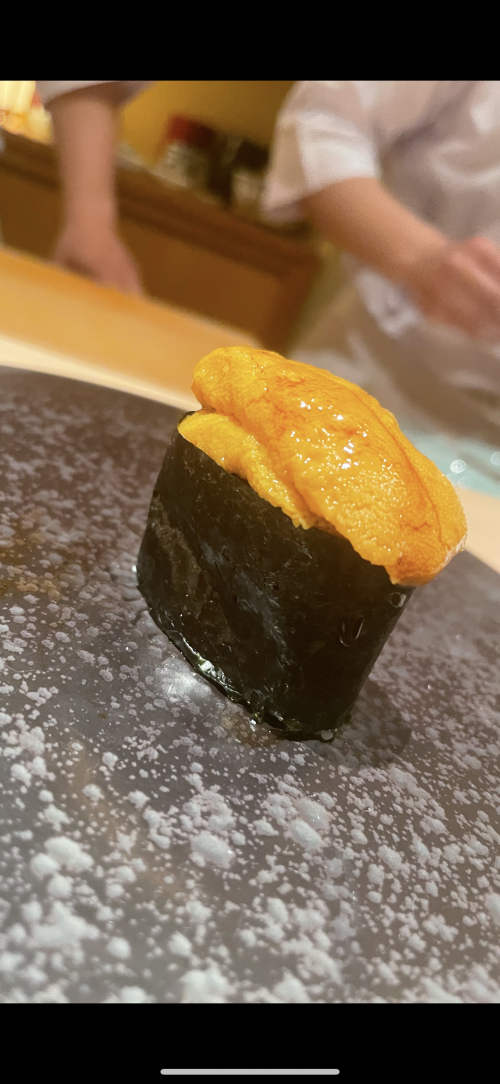
ウニ
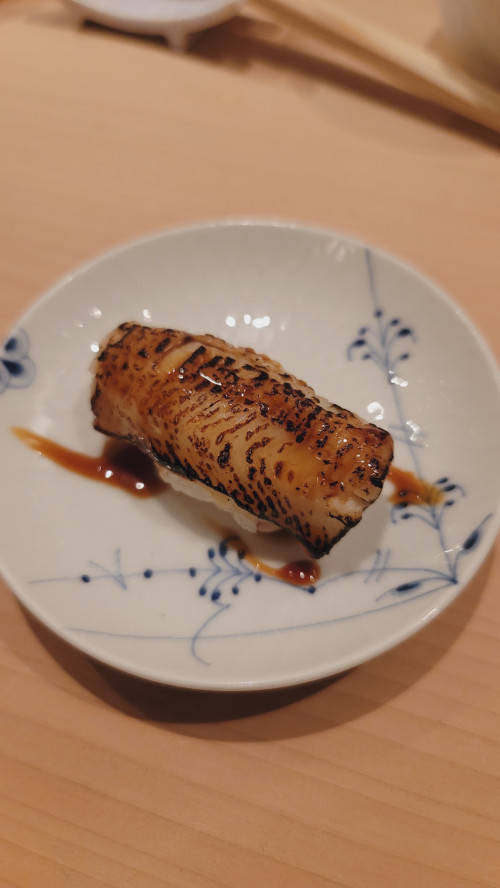
穴子
An essential ingredient in sushi and tempura is the conger eel. The conger eel, also known as Anago in Japanese, is commonly referred to as the sea eel. "Anago" originates from its habit of spawning in crevices between rocks or sandy areas. Although conger eels and freshwater eels (unagi) have a similar appearance, conger eels have white spots along their sides and fewer scales. Unlike the rich and oily flavour of freshwater eels, conger eels have a milder taste due to their lower fat content. In the Kanto region of Japan, conger eels are commonly prepared as "Nianago" (simmered conger eel) or "Tenpura" (tempura). In contrast, in the Kansai region, they are often grilled and known as "Yakianago" (grilled conger eel).
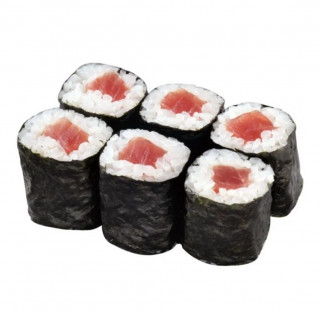
鉄火巻き
The names of sushi usually come from the "neta" (ingredients placed on top of the sushi, such as fish, shrimp, shellfish, or squid). However, the rolled sushi (makizushi) served in the latter half of omakase often has unique names unrelated to the ingredients. For example, rolled sushi made with tuna (maguro) red flesh (akami) and wasabi is called tekkamaki. But why is it called tekkamaki (鉄火巻き) instead of maguro maki (マグロ巻き)? There are a few theories about this. The first theory is that "tekka" (鉄火) originally referred to the state of iron turning red when heated or the sparks flying when hammered. The name tekkamaki is said to have come from the resemblance between the red color of tuna akami and heated iron. The second theory links the name tekkamaki to gambling culture. In old Japan, gambling dens were called "tekkaba" (鉄火場). Gamblers favored maguro maki as it could be eaten with one hand without getting their hands dirty during games, which led to the name tekkamaki. Both theories provide intriguing background to the name tekkamaki.
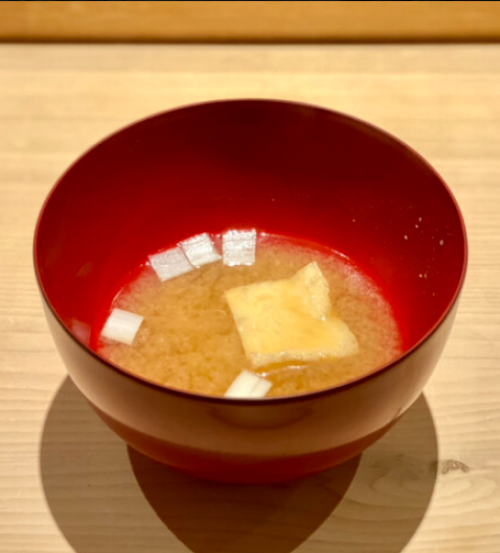
お味噌汁
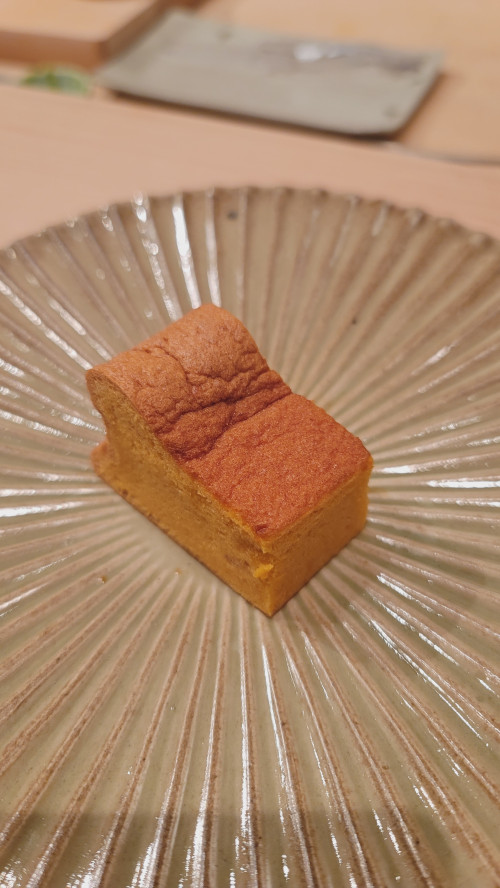
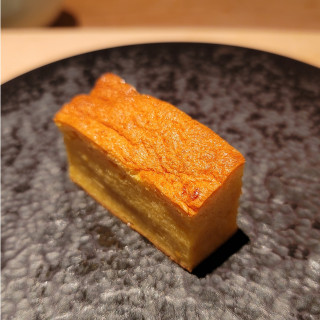
玉子焼き
The "Gyoku" (egg) served at sushi restaurants is a sweet, fluffy omelette that can also be enjoyed as a dessert. It is called "Gyoku" because its shape and color resemble the precious gem "gyoku" (jade). The beautiful golden layers of the omelette are reminiscent of a gemstone. The basic way to make Gyoku is to mix eggs with sugar and dashi, and then carefully cook it using a frying pan or a specialized tamagoyaki pan. The chef pays close attention to the cooking time and seasoning to create uniformly golden layers. Many sushi restaurants add ground white fish or shrimp to the egg mixture to give it a richer, smoother texture and flavor. This addition makes Gyoku different from a simple omelette, giving it a unique, deep taste. The appearance of Gyoku is also important, requiring a uniform color and shape. This dish tests the skill and experience of the chef and serves as a measure of the sushi restaurant's quality. For diners, Gyoku is a memorable, flavorful dish that perfectly concludes the meal.